The Wrong Question Everyone Still Asks
Most businesses entering paid marketing still approach channels as a comparison problem. They ask whether digital outperforms outdoor, whether social media is more efficient than television, or whether traditional formats still justify their cost. This framing feels logical, but it leads to consistently weak strategies.
The real difference between high-performing campaigns and average ones is not the channel selection itself, but the ability to understand what role each channel plays in the decision journey.
Online media is fast, measurable, and reactive. Outdoor is ambient, persistent, and often underestimated. Traditional media, particularly TV and radio, still operates at a scale and psychological depth that digital platforms struggle to replicate. The question is not what works. The question is what works at which moment.
Online Media: Precision Without Context
Digital advertising remains the most controllable environment. Platforms like Meta and Google allow granular targeting, rapid testing, and immediate feedback loops. This creates the impression that online media is inherently superior because performance is visible and adjustable.
However, this precision often comes with a hidden limitation. Digital campaigns tend to operate within existing demand, optimizing toward users who are already close to action. This makes them extremely efficient in the short term, but less effective at generating new attention from users who are not actively searching or considering a product.
A well-documented example of this limitation can be seen in smaller direct-to-consumer brands that rely heavily on paid social. Many of them experience strong early performance, followed by stagnation as audience saturation increases and acquisition costs rise. Without additional channels to expand reach and reset attention, digital efficiency begins to decline.
Example: Ridge Wallet (Early Growth Strategy)
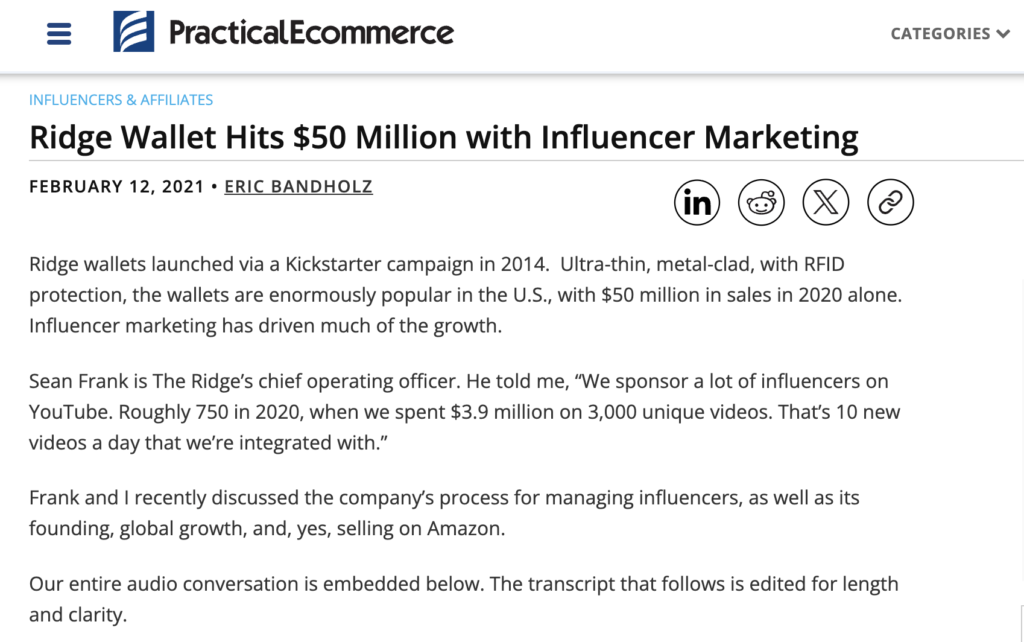
Ridge Wallet, before becoming a widely recognized DTC brand, relied heavily on paid social and influencer marketing. Their early campaigns were highly targeted and performance-driven, focusing on users already interested in minimalism, EDC (everyday carry), and lifestyle products.
What made their strategy interesting is not just the use of online channels, but how quickly they encountered scale limitations. As campaigns matured, they had to expand beyond narrowly defined audiences and introduce broader exposure tactics, including YouTube integrations and sponsorships, to sustain growth.
Outdoor Media: Visibility That Works Without Interaction
Outdoor advertising is often dismissed as outdated because it lacks immediate measurability. Yet its strength lies exactly in what digital lacks — unavoidable presence.
Unlike online ads, which depend on user behavior, outdoor media operates in physical space. It does not require clicks, engagement, or intent. It simply exists within the user’s environment, repeating exposure over time.
This creates a different type of impact. Not immediate conversion, but memory formation and brand familiarity, which later influences digital performance.
Example: Oatly’s Outdoor Strategy
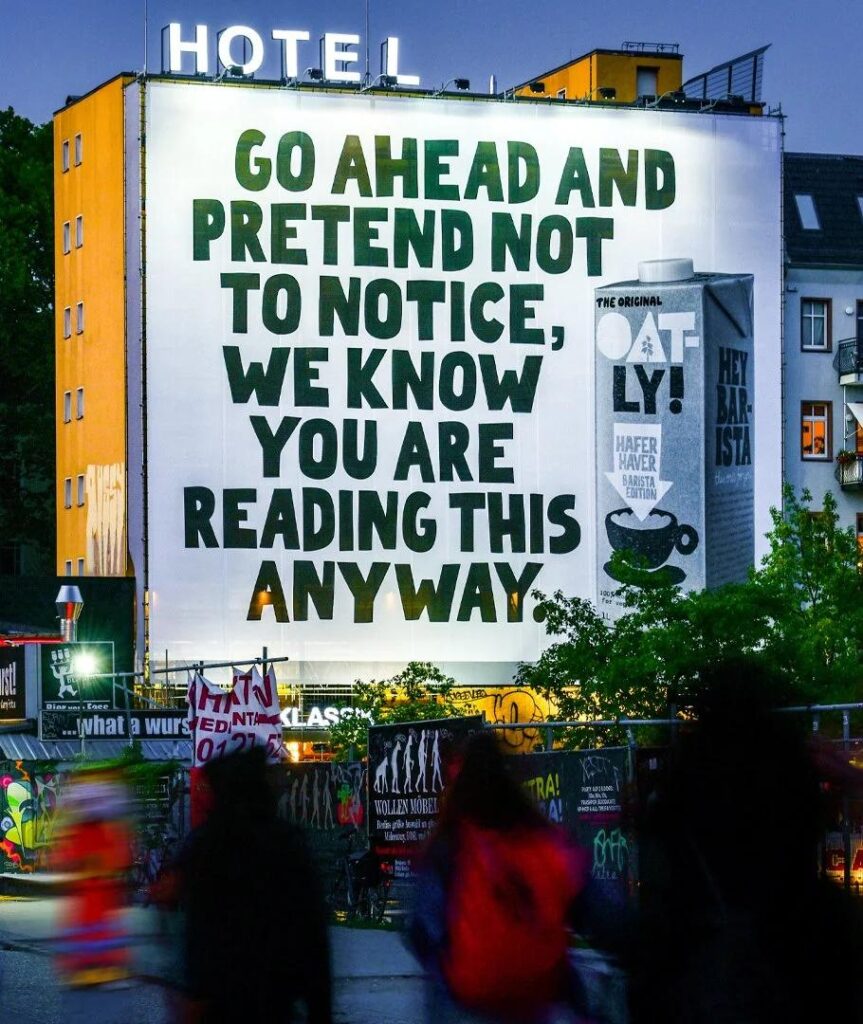
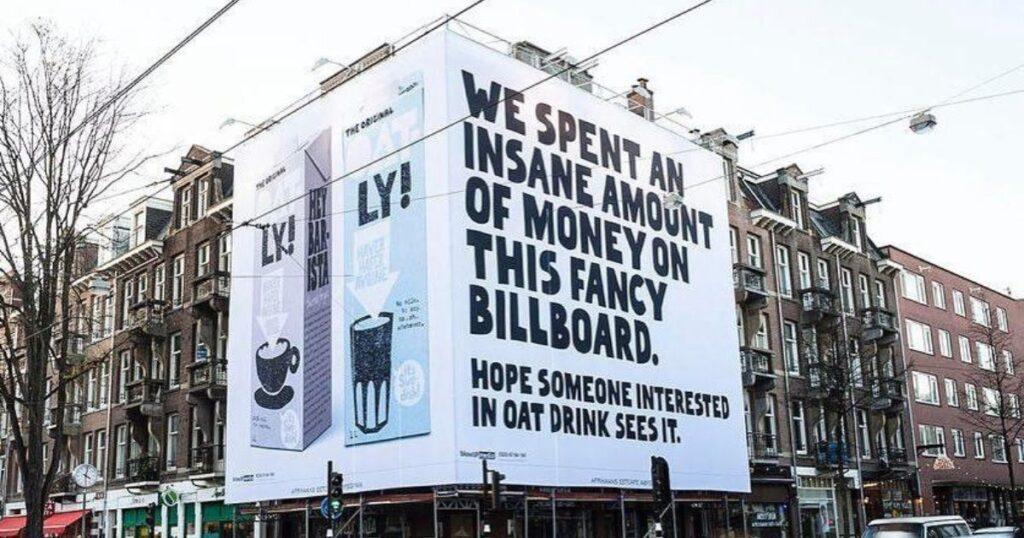
Oatly, before becoming a global brand, used highly unconventional outdoor campaigns across European cities. Their billboards featured intentionally imperfect, almost anti-advertising copy such as:
“Wow no cow”
“It’s like milk, but made for humans”
These campaigns were not designed for direct response. They were designed to create curiosity and memorability in everyday environments.
What happened next is critical:
users exposed to these outdoor ads later responded more strongly to digital campaigns, even if attribution systems could not directly connect the two.
What This Looked Like
Traditional Media: Scale and Emotional Weight
Traditional media, particularly television and radio, is often underestimated in modern marketing discussions because it lacks the precision and feedback loops of digital channels. However, its strength lies in scale and emotional impact.
Television, in particular, still creates a level of perceived legitimacy and trust that digital formats struggle to replicate. For smaller brands entering broader markets, this can act as a credibility multiplier.
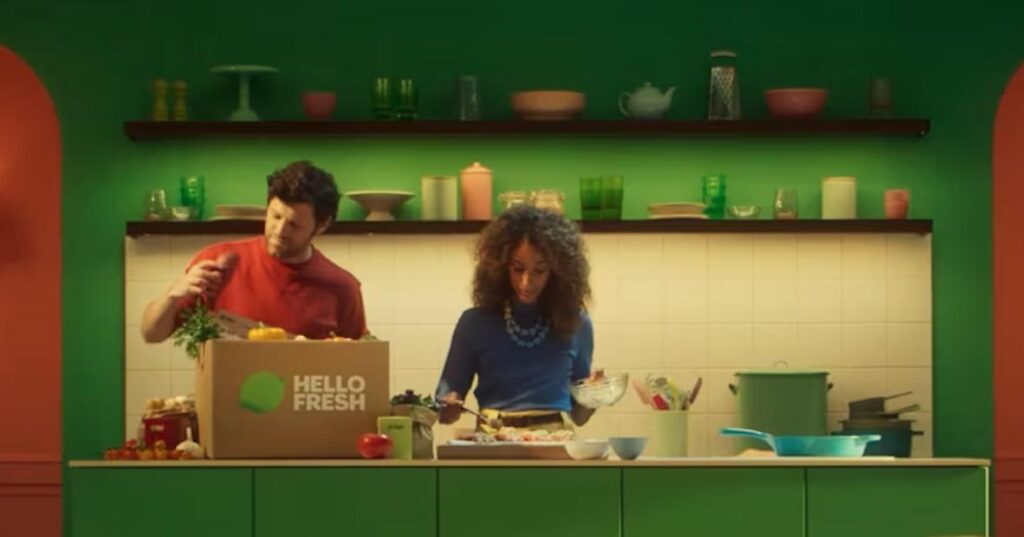
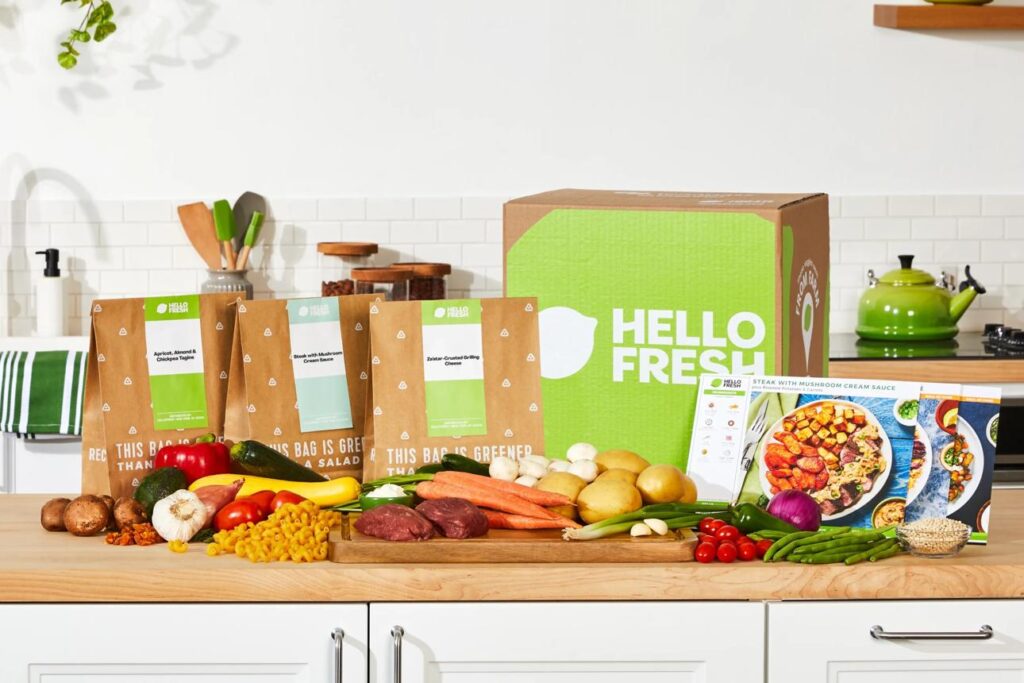
Example: HelloFresh (Expansion Phase)
HelloFresh used a combination of digital and traditional channels, including television advertising, during its rapid expansion across Europe and the US.
While digital channels drove acquisition efficiency, TV played a critical role in:
- increasing brand recognition
- accelerating trust
- improving performance across other channels
This combination allowed them to scale faster than relying on performance marketing alone.
What This Looked Like
The Real Insight: Channels Don’t Compete — They Compound
Looking at these examples, the pattern becomes clear.
- Online media captures intent
- Outdoor creates presence
- Traditional builds trust and scale
Individually, each channel has limitations. Together, they create a system where:
- awareness feeds search
- familiarity improves conversion
- repeated exposure reduces friction
This is why campaigns that rely on a single channel often plateau, while those that combine channels continue to grow.
Makstraffic Perspective
“Performance marketing doesn’t fail because of bad ads.
It fails when everything depends on one channel.”
— Makstraffic team
Conclusion: What Still Works in 2026
All three channels still work.
But they work differently, and more importantly, they work together.
The biggest mistake businesses make is optimizing each channel in isolation, expecting it to deliver full-funnel results. In reality, no single channel is designed to do that.
Growth happens when channels are aligned with their actual role in the user journey and when data is interpreted across the system, not within individual platforms.
What This Means in Practice — And Where We Come In
If your marketing relies heavily on one channel and performance is becoming unstable, the issue is not necessarily creative or targeting. It is often structural — a lack of channel balance. At Makstraffic, we design campaigns as interconnected systems where outdoor supports digital, digital captures demand, adn traditional accelerates trust.
Because the goal is not to find the best channel. It is to build a system where each channel makes the others stronger. And that’s where most growth actually happens.