
Why Reputation is Your Strongest (and Most Fragile) Asset
In the digital-first economy, a brand’s reputation has become one of its most valuable—and most vulnerable—assets. Unlike in the past, when reputation was shaped mainly by traditional media, personal experience, and word-of-mouth, today it is molded in real time through search results, social platforms, review sites, and influencer commentary.
One misstep, whether it’s a poorly worded tweet, a negative review gone viral, or a major corporate scandal, can wipe out years of carefully built trust. Conversely, a strong reputation can protect businesses during crises, attract top talent, increase customer loyalty, and even command premium pricing.
The Evolution of Reputation Management
Stage 1: Traditional PR
Historically, reputation management fell within the domain of public relations—press releases, media coverage, and crisis statements. Companies controlled the message, and information moved slowly.
Stage 2: Digital Monitoring
With the rise of social media and online reviews, businesses shifted to monitoring brand mentions across platforms. The goal was to detect negative commentary and minimize damage.
Stage 3: Proactive Engagement
Today, reputation management requires active engagement, predictive analytics, and full integration with marketing, customer service, and corporate governance. Brands must shape narratives, build community trust, and anticipate crises before they hit.
Why Reputation Management Matters in 2025
- Trust is Scarce: In an era of misinformation and AI-generated content, trust has become the ultimate currency. Brands with strong reputations cut through the noise.
- Virality is Ruthless: A single TikTok video can sink stock prices or destroy years of goodwill.
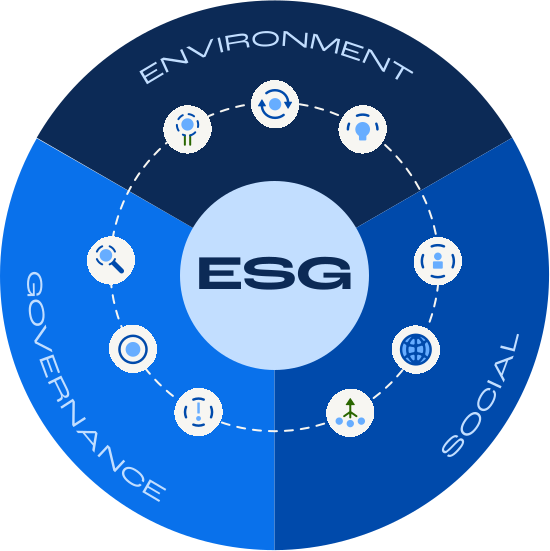
- Investor Confidence: Institutional investors increasingly assess ESG and reputation metrics before funding.
Building a Reputation Management Framework
1. Monitoring: Always-On Listening. Use tools like Brandwatch, Meltwater, or Sprout Social to monitor mentions across platforms in real time. Don’t just track your own brand—also monitor competitors, industry keywords, and emerging social conversations. Track sentiment shifts over time to identify patterns.
2. Data-Driven Analysis. Apply AI-powered sentiment analysis to detect early warning signs. Integrate monitoring data into a centralized dashboard that includes PR mentions, social engagement, SEO rankings, and customer reviews. Conduct quarterly “reputation audits” to measure perception against benchmarks.
3. Engagement & Transparency. Respond within 1 hour on social media to major issues—speed shows accountability. Acknowledge mistakes openly. Brands that apologize quickly recover faster than those that deny or delay. Train customer support teams in empathetic communication—every interaction shapes reputation.
4. Crisis Preparedness. Maintain a crisis playbook: assign spokespersons, create communication templates, and set escalation paths. Run simulation drills quarterly with marketing, PR, and leadership teams. Establish a 24/7 crisis response team with decision-making authority.
5. Long-Term Trust Building. Publish thought leadership articles and showcase industry expertise. Invest in CSR (Corporate Social Responsibility) and ESG initiatives—modern audiences reward socially responsible brands. Develop brand ambassadors and influencer partnerships to amplify positive narratives.
Crisis Response: From Firefighting to Future-Proofing
When a crisis hits, the goal isn’t just damage control—it’s transformation. Here’s a three-phase approach:
Phase 1: Immediate Response (0–24 hours)
- Acknowledge the issue publicly.
- Share verified facts—don’t speculate.
- Demonstrate empathy toward those impacted.
Phase 2: Remediation (24–72 hours)
- Provide a concrete action plan: steps you’re taking to fix the problem.
- Keep communication transparent and consistent.
- Engage with customers directly via social channels and email updates.
Phase 3: Recovery (72 hours onward)
- Implement long-term improvements.
- Turn the crisis into a narrative of accountability and growth.
- Highlight positive customer experiences to restore balance.
Pro Tips & Actionable Hacks for Modern Reputation Management
- Google Autocomplete Hack: Regularly check what Google suggests when typing your brand name—these are reputation signals customers see first.
- Own Page One: Dominate SERPs with positive press, guest posts, and owned content to push down negative results.
- Micro-Influencers: Build relationships with niche influencers who can defend your brand authentically if controversy arises.
- Dark Social Monitoring: Track mentions in private groups, Slack communities, and messaging apps using advanced tools.
- Crisis Templates: Draft generic apology and action statements in advance—adapt them quickly in emergencies.
- Leverage Employees: Empower staff as brand advocates. Employee voices are often more trusted than CEOs.
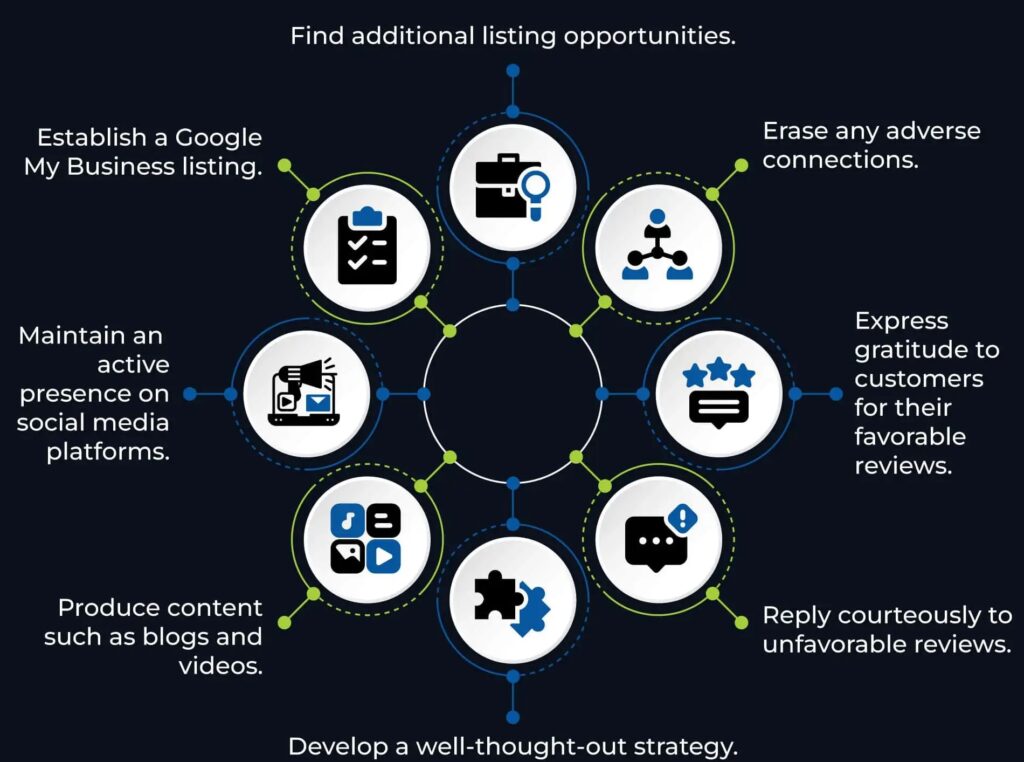
- And that’s not all. We’ve listed some additional options in the infographic:
The Future of Reputation Management
Looking ahead, three trends will redefine how businesses protect and build reputation:
- AI-Powered Early Detection: Predictive systems will flag potential PR crises before they hit mainstream.
- Decentralized Narratives: Web3, blockchain, and niche online communities will fragment reputations into micro-ecosystems.
- Value-Driven Branding: By 2030, reputation will be less about polished campaigns and more about proven ethics, sustainability, and inclusivity.
Conclusion: Reputation as Strategy, Not Damage Control
Reputation management is no longer about silencing critics or reacting to scandals—it’s about building resilient, trust-driven relationships with stakeholders. Companies that monitor, engage, and respond with transparency will not only survive crises but also turn them into opportunities for growth.
The reality is simple: your reputation is being written every day, whether you manage it or not. The smartest brands choose to lead that conversation, not chase it.